
Multi-Youth Center Release Routes
Van Zandt County Multi-Youth Center is a juvenile pre-adjudication detention facility in Grand Saline. Pre-adjudication means the young person is being held while the juvenile matter proceeds, before a final adjudication in that case. It is not an adult county jail, a TDCJ prison, or an adult release-list location. The adult Sheriff portal should not be used to search for a child’s custody or release.
A juvenile can leave detention under a court or authorized juvenile-process decision. The next setting may involve a parent or guardian, a placement, another juvenile facility, or another arrangement directed through the case. The research does not establish a public release schedule, exit point, or universal destination. Authorized family members should follow the instructions supplied by the facility, juvenile probation, court, or counsel. A person without legal authority may receive no case-specific answer, even when the request is well meant.
Confirm Multi-Youth Center Release
Confirmation starts with the office responsible for the juvenile case, and the requester must be ready to establish a lawful relationship to it. The facility can explain its contact process and route an authorized inquiry. Juvenile probation may address supervision or placement administration within the limits of the law. The juvenile court record or order controls the legal decision, while counsel can interpret the order and communicate through protected case channels.
There is no public adult-style lookup to substitute for that process. The Van Zandt Sheriff’s Released mode covers adult jail episodes. TDCJ’s locator covers people currently incarcerated in the adult state prison system. BOP and ICE locators serve federal and immigration custody. None of those systems should be presented as the routine locator for a young person at the Multi-Youth Center.
- Call the Multi-Youth Center and identify your role without sharing sensitive details through an insecure channel.
- Ask which juvenile probation office, court, or counsel contact is responsible for the case.
- Complete any identity, guardianship, or authorization check the responsible office requires.
- Use the official order or authorized case communication to confirm the release or placement decision.
- Follow pickup, transport, supervision, and appointment instructions given for that child.
A “no information” response does not prove that the child is absent or released. It may mean confidentiality law bars disclosure to that requester. Do not try to work around a restriction through adult records systems or unofficial publication.
Multi-Youth Center Release Contact
The official facility contact is the practical starting point for an authorized inquiry. Ask staff to route the question to the correct juvenile office. Do not ask for a public list of children or a booking-photo file. The office may limit the response, confirm only procedural information, or require the requester to work through a parent, guardian, attorney, juvenile probation officer, or court.
Van Zandt County Multi-Youth Center
323 East Garland
Grand Saline, TX
903-962-6292
Call for authorized juvenile-case routing.
Responsible Case Channel
Facility, juvenile probation, juvenile court, or counsel
Access depends on the requester’s identity, role, and authority under juvenile confidentiality rules.
Use restrained language when calling. State who you are and ask what proof is needed. A broad demand for a “release record” may not match a releasable juvenile document. If counsel is involved, case-specific questions should be routed there. Facility staff cannot be expected to disclose protected details merely because an adult jail would publish a similar field.
The official Texas Juvenile Justice Department facility record documents the center itself.
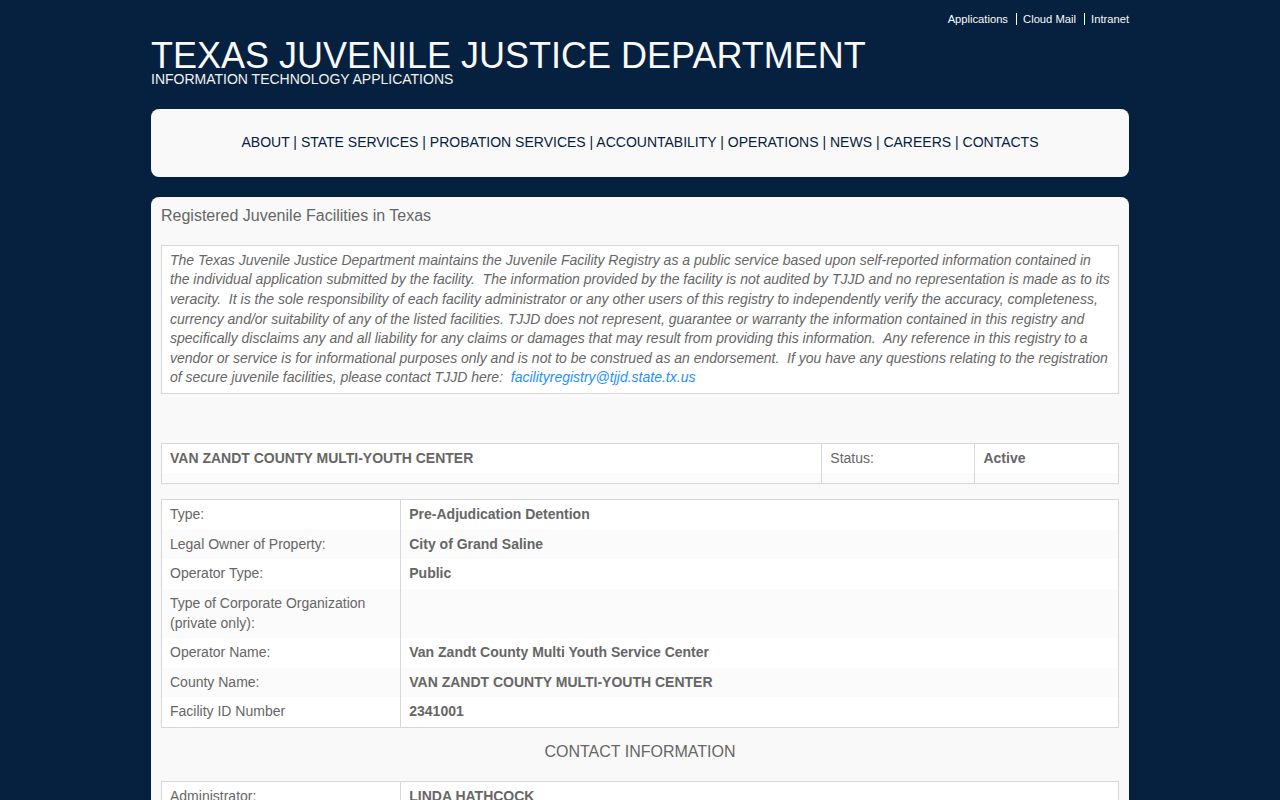
The image confirms the official facility listing, but it does not create public access to a child’s custody, identity, or release information.
Multi-Youth Center Facility Facts
The Van Zandt County Multi Youth Service Center operates the juvenile pre-adjudication facility. The Texas Juvenile Justice Department record lists a rated capacity of 16. Rated capacity describes the approved scale of the facility. It is not a current population count and cannot show whether any named young person is held there. No inference about present custody should be drawn from capacity.
The TJJD juvenile department directory supplies official statewide department context.
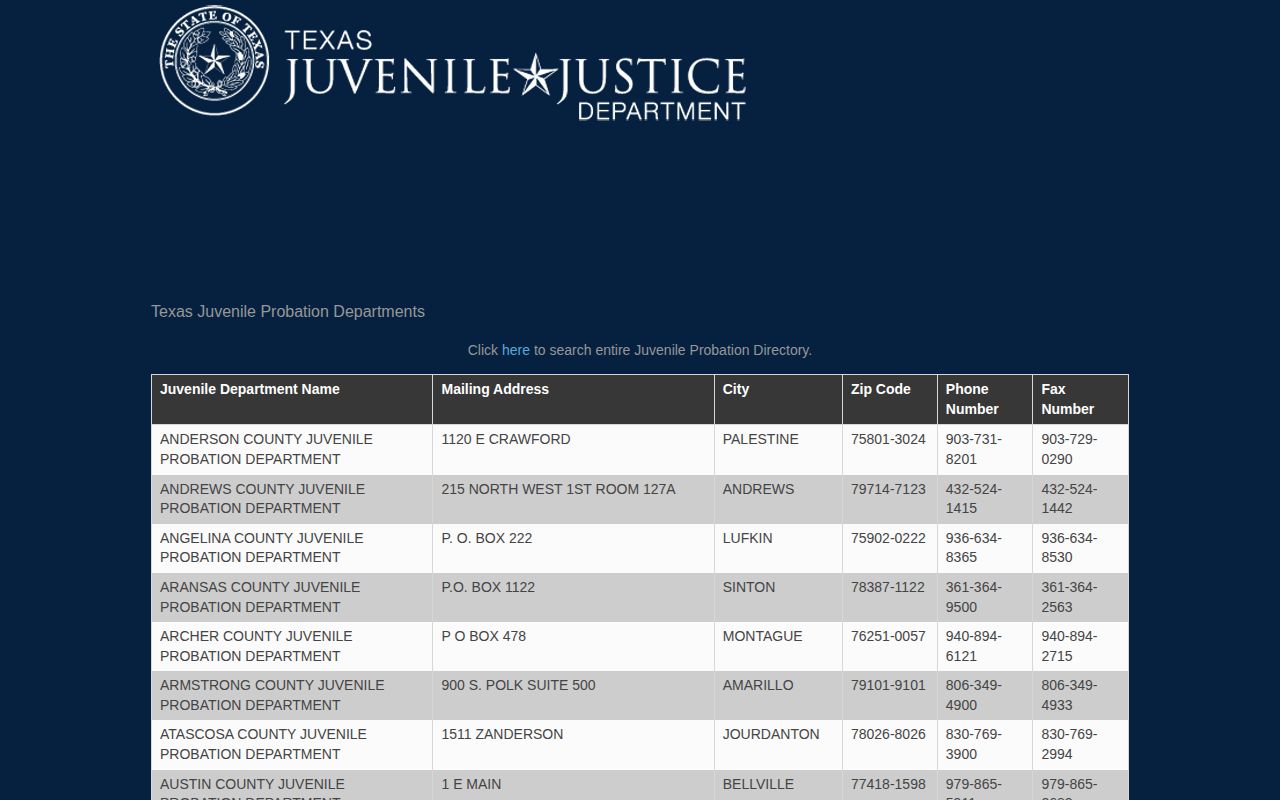
The directory helps identify official juvenile administration channels without exposing protected individual records.
Van Zandt Juvenile Record Limits
Texas public-information rules do not erase the separate confidentiality rules governing juvenile records. The research specifically warns that juvenile identity, custody, and case records must not be folded into the adult portal workflow. A public-information request cannot force disclosure that another law makes confidential. The correct response to a restricted record is to respect the restriction and use an authorized case channel.
This boundary affects every part of a release inquiry. There should be no public recent-release list for children, no booking-photo discovery process, and no advice to search the adult jail roster for a Multi-Youth Center resident. A protected record should be described as unavailable to the public. It should never be reconstructed from stray online mentions, old copies, or commercial sources.
| Question | Adult county jail | Multi-Youth Center |
|---|---|---|
| Public released search | Official Sheriff Released mode exists. | Not an authorized juvenile locator. |
| Public booking image | May appear on an adult release detail. | No public mugshot workflow for children. |
| Record contact | Sheriff and public-information process. | Facility, juvenile probation, court, or counsel under access rules. |
| Missing search result | Requires written-record and transfer follow-up. | May reflect confidentiality and proves no status. |
Van Zandt Facility Distinctions
Van Zandt County has two mapped detention facilities, but their records systems must remain separate. The Van Zandt County Jail release route is for adults and uses the Sheriff’s Released mode, written jail records, and court files. The Multi-Youth Center route is confidential and role-based. Listing both facilities does not make their records interchangeable.
No TDCJ prison, Bureau of Prisons institution, or dedicated ICE detention center was identified inside Van Zandt County. Those systems can still become relevant after a lawful transfer in an adult matter. They do not provide a shortcut into a juvenile case. When a child’s matter involves another agency or placement, follow the exact contact given by juvenile probation, the court, counsel, or facility staff.
Multi-Youth Center Release Planning
No official universal release hour, public waiting area, exit door, transport rule, or property procedure was found for the center. Do not plan from adult jail practice. An authorized parent or guardian should confirm the time, location, identity documents, transport arrangements, medications, property, and next appointment with the responsible juvenile office.
Release from secure detention may be only one step in an ongoing juvenile case. Conditions, supervision, placement, school, treatment, or court dates may follow if ordered. Those details are individual and protected. The court order and direct case communication control. General facility information cannot replace them, and a public web search should not be used to guess at a child’s status. Confirm each instruction through the assigned official.